T-Mobile 4G Slide Official QWERTY — Android And boosted Camera
T-Mobile has officially announced the myTouch 4G Slide, the carrier’s latest Android smartphone and another QWERTY handset from HTC. Packing HSPA+ connectivity for T-Mobile USA’s 4G network, the myTouch 4G Slide has a 3.7-inch WVGA touchscreen and an 8-megapixel camera; it’s that camera which the carrier is most proud of, though, with improved low-light performance thanks to a new f/2.2 wide aperture lens and a backlit sensor, along with the claim of zero shutter lag and in-camera HDR.
The camera also supports SweepShot, for taking panoramic photos simply by waving the myTouch 4G Slide in front of the scene, and BurstShot, which as the name suggests fires off a handful of frames and then allows you to choose the best one later on. There’s a dual-LED flash on the back, and a front-facing camera with Qik preloaded for video calls.
Of course, you’re also getting Android 2.3.3 Gingerbread along with HTC Sense 3.0 – so the active lockscreen from the Sensation – and inside is the 1.2GHz dual-core Qualcomm Snapdragon processor that we’ve seen in other recent HTC devices, like the EVO 3D. An updated version of the carrier’s “Genius Button” supports new voice commands – allowing you to call or text people, or search online – as well as text-to-voice.
The T-Mobile myTouch 4G Slide will be available in July 2011, in either black or khaki, priced from $199.99 with a new, two-year agreement.
T-Mobile has officially announced the myTouch 4G Slide, the carrier’s latest Android smartphone and another QWERTY handset from HTC. Packing HSPA+ connectivity for T-Mobile USA’s 4G network, the myTouch 4G Slide has a 3.7-inch WVGA touchscreen and an 8-megapixel camera; it’s that camera which the carrier is most proud of, though, with improved low-light performance thanks to a new f/2.2 wide aperture lens and a backlit sensor, along with the claim of zero shutter lag and in-camera HDR.
Of course, you’re also getting Android 2.3.3 Gingerbread along with HTC Sense 3.0 – so the active lockscreen from the Sensation – and inside is the 1.2GHz dual-core Qualcomm Snapdragon processor that we’ve seen in other recent HTC devices, like the EVO 3D. An updated version of the carrier’s “Genius Button” supports new voice commands – allowing you to call or text people, or search online – as well as text-to-voice.
The T-Mobile myTouch 4G Slide will be available in July 2011, in either black or khaki, priced from $199.99 with a new, two-year agreement.
Sony PS Vita May Not — Ship Until January 2012
Sony’s PSP successor, which has long been dubbed the NGP for next-generation portable was finally unveiled at E3 2011 as the PS Vita. It promises to bring PS3 console quality games to handheld and was slated for this fall just in time for the holiday season. However, recent reports from online pre-orders through Amazon suggest that the device may not ship until January of next year.
Several readers of Destructoid claim to have placed orders for the PS Vita on Amazon only to be notified of a January 2012 ship date. So far, rumors have pointed to a November 4th release of the PS Vita for the UK, but not much has surfaced on a U.S. release date. Destructoid is claiming a December 31 release that would suggest most shipments won’t arrive until at least January 4th. A two-month difference between the UK and US release plus missing the holiday season makes the claim a bit iffy.
The PS Vita touts a 5-inch OLED touchpad screen along with a second touchpad on the back side. It will also have dual analogue sticks, six-axis motion sensor, and both a front and back camera. It will support Wi-Fi and 3G with initial carrier being AT&T. New social features called “Party” and “Near” will also be part of the package. The Wi-Fi-only model is priced at $249 while the 3G/Wi-Fi model is $299.
Sony’s PSP successor, which has long been dubbed the NGP for next-generation portable was finally unveiled at E3 2011 as the PS Vita. It promises to bring PS3 console quality games to handheld and was slated for this fall just in time for the holiday season. However, recent reports from online pre-orders through Amazon suggest that the device may not ship until January of next year.
The PS Vita touts a 5-inch OLED touchpad screen along with a second touchpad on the back side. It will also have dual analogue sticks, six-axis motion sensor, and both a front and back camera. It will support Wi-Fi and 3G with initial carrier being AT&T. New social features called “Party” and “Near” will also be part of the package. The Wi-Fi-only model is priced at $249 while the 3G/Wi-Fi model is $299.
Solar Sinter Uses — Sand And Sun For 3D Printing
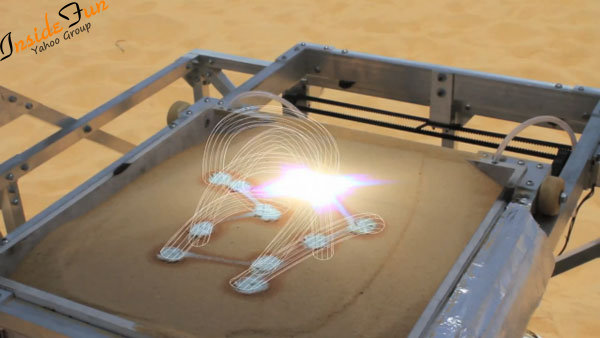
A student named Markus Kayser created an awesome project for a MA Design Products project. I hope he graduates with honors simply for the coolness of this project. Kayser created a device that can take advantage of the two unlimited resources out in the desert – sun and sand. The project is dubbed Solar Sinter and is a 3D printer powered by the sun and it uses the sand as the medium to create the objects it prints.
The Solar Sinter was completed in the middle of May and then Kayser and his creation headed out into the Sahara desert in the area of Siwa, Egypt to put his creation to the test for two weeks. The concept worked and creates a cool process that can be harnessed for the design and creation of 3D items that people need. The device uses solar energy to turn the sand into a form of glass.
The Solar Sinter uses open source ReplicatorG software, which is a 3D printing program. The finished project is on display at the Royal College of Art graduate exhibit right now. Check out the video below to see the solar Sinter in action.
Olivetti Olipad 110 Android 3.1 — Honeycomb Tablet
We first talked about Italian company, Olivetti, having plans for an Android tablet all the way back in December of last year. The company has since produced the OliPad 100 that was released with Android 2.2 Froyo and now has a second one called the Olipad 110 with Android 3.1 Honeycomb that’s getting ready to launch. A demo video of the Olipad 110 has surfaced recently and you can watch it after the cut, but you’ll need some Italian language skills.
The OliPad 110 will feature an NVIDIA Tegra 2 dual-core processor and a 10-inch screen with resolution bumped up to 1280 x 800. It will have 1GB of RAM, 16GB internal storage, as well as a 2-megapixel front-facing camera and a 5-megapixel rear-facing camera. Connectivity will include a micro HDMI-out, a mini USB slot, and a microSD card slot.
The new tablet with Android 3.1 Honeycomb, hardware improvements, and better display resolution is a nice upgrade from the original OliPad 100, touted as Italy’s first ever Android tablet. The OliPad 110 is also slightly thinner than the 100, packing in more performance in a sleeker package. It’s believed to be set for a July launch with pricing to be around 399 euros or about $549.
Mouse Pad Travel Pouch Raises — Question of Mouse
When was the last time you used a mouse? The last time I used a mouse, it was the late 1990s and I was playing the MMORPG Diablo II. Sidenote: Diablo III is coming out soonish, (within the next year, we hope,) and I may need a mouse – any suggestions? Since then, essentially every person I know, my age or otherwise, has been using a laptop for all their computing needs. A desktop replacement, rather, with a trackpad and no need for a mouse. The manufacturing and distribution group Smartfish has just released a product that, by all means, should have been invented years ago: the Mouse Pad Travel Pouch. Will you partake?
Have a look back at a device we reviewed at the beginning of this year: the HP ENVY 17 3D, a desktop replacement notebook. This laptop was (and is) so gigantic and powerful that there’s no reason for you to own a separate device. There’s no reason for you to have a separate computer unless you want to be mobile, that is. And for times like that, what will you do? Will you go for a tiny laptop like a MacBook Air 11.6?? Or will you hit the center with a lovely burnt orange Lenovo U260 IdeaPad? We’ve all got decisions like these to make – but what about that classic symbol of the modern computer, the cursor controller, the clicker, the mouse?
What’s up, world, is the mouse dead, or will you purchase the oddly enticing Mouse Pad Tavel Pouch for $14.95? Or I suppose you could just put your mouse in the bag you’ve already got. Gaming around the world, or sticking in the house?
When was the last time you used a mouse? The last time I used a mouse, it was the late 1990s and I was playing the MMORPG Diablo II. Sidenote: Diablo III is coming out soonish, (within the next year, we hope,) and I may need a mouse – any suggestions? Since then, essentially every person I know, my age or otherwise, has been using a laptop for all their computing needs. A desktop replacement, rather, with a trackpad and no need for a mouse. The manufacturing and distribution group Smartfish has just released a product that, by all means, should have been invented years ago: the Mouse Pad Travel Pouch. Will you partake?
What’s up, world, is the mouse dead, or will you purchase the oddly enticing Mouse Pad Tavel Pouch for $14.95? Or I suppose you could just put your mouse in the bag you’ve already got. Gaming around the world, or sticking in the house?
Microsoft rumored to be working — Devs on free to play gaming scheme
On the computer platform there are a bunch of games that use the free to play scheme and are supported by other means. These free to play games allow the user to buy things in the game to make their gaming more fun. The perfect example of the free to play game that also makes a lot of money in add ons is Farmville. There are hoards of people that buy points to add items on the game. Sources claim that to support this style of game Microsoft is preparing a microtransaction system.
The sources also claim that Microsoft is working behind the scenes with game developers to try to get them to build games that are supported by smaller in game transactions. The games could also make money by selling premium upgrades as well. So far Microsoft has offered no official statement on the plans for free to play gaming and the micro transaction service.
The success of social games and their developers at using free to play gaming with small micro payments to support upgrades and other items should appeal to the traditional game developers. The other challenge for Microsoft may be the fact that gamers have to pay to play games online by purchasing an Xbox Gold account. One step to making this work would seem to include opening up online gaming for all Xbox users.
On the computer platform there are a bunch of games that use the free to play scheme and are supported by other means. These free to play games allow the user to buy things in the game to make their gaming more fun. The perfect example of the free to play game that also makes a lot of money in add ons is Farmville. There are hoards of people that buy points to add items on the game. Sources claim that to support this style of game Microsoft is preparing a microtransaction system.
The success of social games and their developers at using free to play gaming with small micro payments to support upgrades and other items should appeal to the traditional game developers. The other challenge for Microsoft may be the fact that gamers have to pay to play games online by purchasing an Xbox Gold account. One step to making this work would seem to include opening up online gaming for all Xbox users.
MasterCard Partners With CSI For Mobile — Payments App On Android
In a strange move, MasterCard has gone on to partner with CSI for their own mobile payments app. The “tap to pay” convenience of mobile payments is expected to really expand next year, with competing services coming from the Google Walletservice, Visa, and ISIS. MasterCard was a partner for Google’s Wallet service, so its not certain why they’ve branched off to push out a separate mobile wallet app.
The new mobile payments partnership will produce an app called CSI Virtual MasterCard that will be available for the iOS, Android, and BlackBerry platforms. The folks at Engadget confirmed that the app is scheduled for launch sometime in July and may enable GlobalVCard users to use their mobile devices of choice to make payments.
But what’s not clear is whether the app will utilize NFC technology or simply be software-based. Currently, the only devices to have NFC chips are the Google Nexus S and Nexus S 4G. Although rumors suggest that the next-gen iPhone will have NFC, the handset won’t arrive until sometime in September. Also, the BlackBerry Bold 9900, which is supposed to support NFC, has been delayed till fall.
In a strange move, MasterCard has gone on to partner with CSI for their own mobile payments app. The “tap to pay” convenience of mobile payments is expected to really expand next year, with competing services coming from the Google Walletservice, Visa, and ISIS. MasterCard was a partner for Google’s Wallet service, so its not certain why they’ve branched off to push out a separate mobile wallet app.
But what’s not clear is whether the app will utilize NFC technology or simply be software-based. Currently, the only devices to have NFC chips are the Google Nexus S and Nexus S 4G. Although rumors suggest that the next-gen iPhone will have NFC, the handset won’t arrive until sometime in September. Also, the BlackBerry Bold 9900, which is supposed to support NFC, has been delayed till fall.
LG Thrill 4G For AT&T — Officially Unveiled
AT&T today confirmed that the LG Thrill 4G will be arriving this summer packed with 3D content. The LG Thrill 4G looks familiar because it’s essentially the LG Optimus 3D but now tied in with AT&T. We first got our hands on the 3D-capable smartphone back when it was announced in February and now it will be ready for the summer with 4G HSPA+. LG’s partnership with Gameloft will also bring more 3D content and games for the device.
What’s nice about the LG Thrill 4G besides supporting 3D image and video capture with its dual array 5-megapixel rear-facing cameras is that it will come with plenty of 3D app support. It will ship with YouTube 3D along with 3D games such as Asphalt 6, Let’s Golf 2, and NOVA. More 3D games can be had from the Gameloft 3D store while 3D movies can be downloaded from mSpot.
The LG Thrill 4G features a 4.3-inch display that supports glasses-free 3D viewing. It has a 1GHz dual-core processor and its dual-array cameras can record 3D in 720p and 2D in 1080p. It will ship with Android 2.2 and support AT&T’s HSPA+ 4G network on launch. If you’re in the market for a 3D smartphone, you might want to take a look at our comparison between the LG Optimus 3D (LG Thrill) and the HTC EVO 3D.
AT&T today confirmed that the LG Thrill 4G will be arriving this summer packed with 3D content. The LG Thrill 4G looks familiar because it’s essentially the LG Optimus 3D but now tied in with AT&T. We first got our hands on the 3D-capable smartphone back when it was announced in February and now it will be ready for the summer with 4G HSPA+. LG’s partnership with Gameloft will also bring more 3D content and games for the device.
The LG Thrill 4G features a 4.3-inch display that supports glasses-free 3D viewing. It has a 1GHz dual-core processor and its dual-array cameras can record 3D in 720p and 2D in 1080p. It will ship with Android 2.2 and support AT&T’s HSPA+ 4G network on launch. If you’re in the market for a 3D smartphone, you might want to take a look at our comparison between the LG Optimus 3D (LG Thrill) and the HTC EVO 3D.
Subscribe to:
Posts (Atom)